

Trutankless
Local Roots is an authorized Trutankless dealer with factory-trained technicians, and Trutankless is the electric tankless water heater we install when a Phoenix home calls for one. The brand sits in a narrow lane: electric tankless, premium tier, US-based. It isn't the right unit for most homes, but for the homes it does fit (no gas line at the heater location, fully-solar homes, ADUs and casitas, all-electric retrofits, additions where running new gas is cost-prohibitive) it's the cleanest answer in the category. We install the Gen3, stock the parts that wear, and do the electrical-load math before we ever quote the install.
Certifications & Credentials
Our team's qualifications with Trutankless equipment.
Authorized Dealer
Local Roots is an authorized Trutankless dealer with parts access for warranty work.
Factory-Trained Technicians
Our technicians complete Trutankless factory training on installation, sizing, and service.
Why We Choose Trutankless
Why We Install Trutankless in Phoenix
Trutankless lives in a narrow but real corner of the Phoenix water heater market. Most homes here have a gas line at the heater, and for those homes a gas tankless (or a Bradford White tank) is the right call. Trutankless is the answer when the gas line isn't there, or when running one would cost more than the heater itself.
The homes where Trutankless makes sense in Phoenix tend to fall into a few categories. Fully-solar homes where the goal is to align every electrical load with the panels' production curve. ADUs and casitas where the existing structure has electrical service but no gas stub. All-electric homes where the homeowner has decided not to add gas. Detached additions where the gas main is on the other side of the property. Older homes where the gas line to the heater location is undersized for tankless and replacing it is impractical. Newer builds in HOAs that restrict gas appliance additions. In all of these cases, the question is "electric tankless or electric tank," and the choice between Trutankless and a generic electric tankless is mostly about build quality and service support over the long haul.
Solar homes deserve a closer look because the case is structural, not just preference. A tank water heater holds 40 or 50 gallons hot all day whether anyone is using hot water or not, which means it draws power overnight and during shoulder hours when the panels aren't producing. A Trutankless only draws when you're actually running hot water, so the load matches the production curve instead of fighting it. For homeowners who built or retrofitted around solar and want every kilowatt the panels produce to do useful work, electric tankless is the cleanest residential answer in the category, and Trutankless is the build we install in it.
When Trutankless doesn't make sense: a typical Phoenix home with an existing gas line to the heater. In that scenario, a gas tankless (Navien) or a gas tank (Bradford White) costs less to install, costs less to operate, and recovers faster on heavy demand. We'll tell you so before quoting the Trutankless. Honest fit matters more than a sale.
The Trutankless Gen3
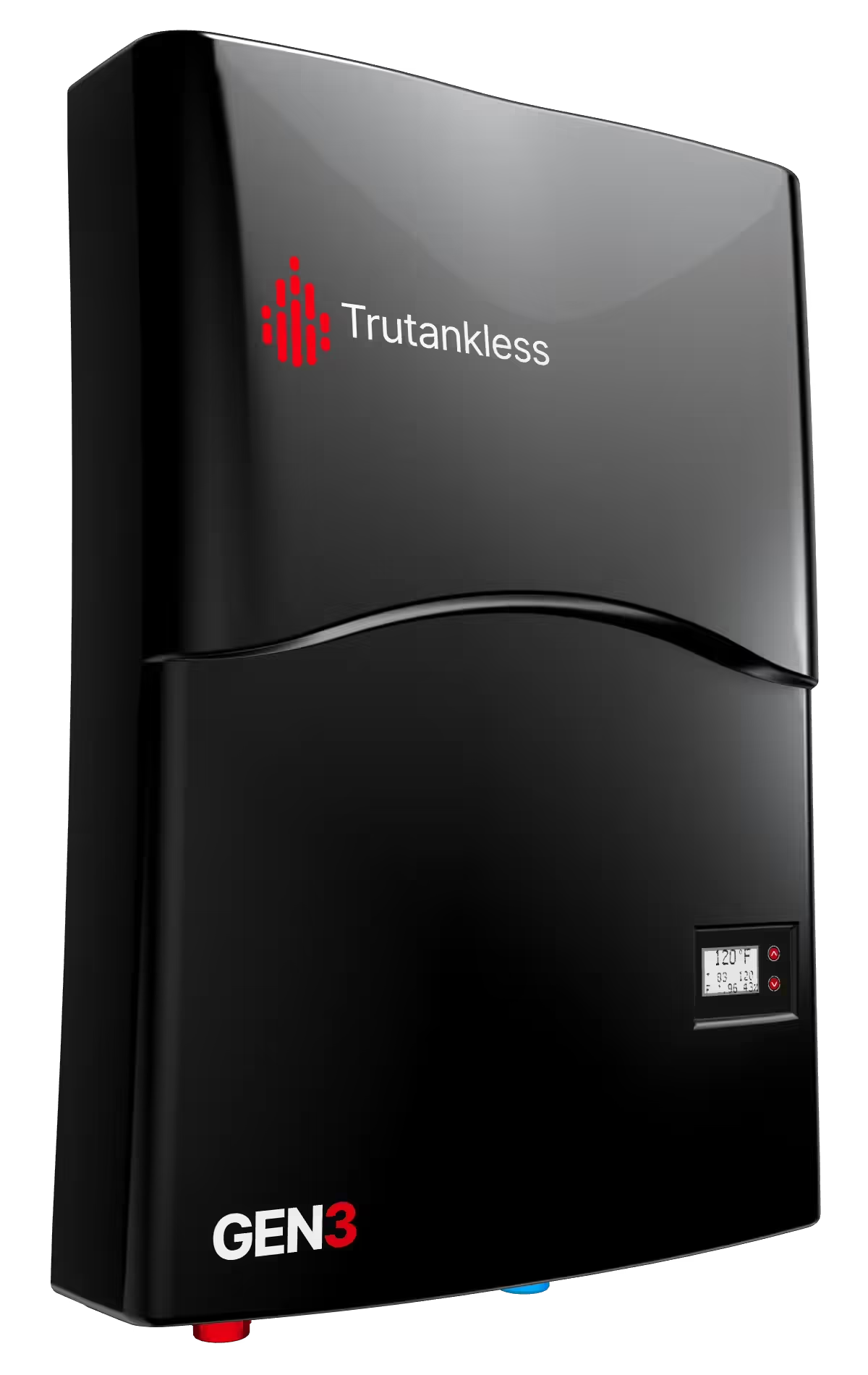
The Gen3 is the model we install. Before any conversation about flow rates or temperature rise, the gating question on every Trutankless install is electrical service, and that's where most of the deal-breakers live. Electric tankless water heaters draw substantial current when they run. The Gen3 is sized for whole-house demand in a residential setting, which means it needs significant breaker capacity and a panel with the headroom to support it.
In practice, that usually means a 200 amp service panel with enough open breaker space and load budget to add the heater on its own dedicated circuits. Older Phoenix homes on 100 or 125 amp service almost always need a panel upgrade first. Even on 200 amp panels, we run a load calculation before we quote the heater install, because the panel is about more than its main breaker rating: the existing AC, electric range, electric dryer, EV charger, and any other large loads all factor in. A panel that looks fine on paper sometimes doesn't have the headroom once the math is honest.
This is the part of a Trutankless project most homeowners don't think about until late in the process, and we'd rather surface it on the first visit than on the day of install. Sometimes the answer is the panel works as-is. Sometimes it's a subpanel or load management. Sometimes it's a full panel upgrade and we coordinate with an electrician. We'll tell you which one applies before you commit.
Sizing for Phoenix is the other technical piece. Inlet water in Phoenix runs warm most of the year, which is good for tankless capacity, but winter inlet temperatures drop noticeably and the heater has to work harder to hit the same outlet temperature. We size the Gen3 against winter inlet rather than summer, which is the failure mode on under-sized tankless installs (the unit performs all summer and falls short in January).
What We Install
Trutankless equipment installed and serviced by Local Roots in the Phoenix metro. Specifications, sizes, and install considerations are covered in the brand context above.
Get a QuoteAbout Trutankless
Trutankless is a US-based brand with a focused product strategy: electric tankless, premium build, narrow catalog. They don't try to compete with the gas tankless majors or the volume electric brands at retail. The Gen3 is engineered for whole-house demand in markets that need it, and the company has put real engineering and support into the platform rather than chasing every market segment.
That focus aligns with how Local Roots installs water heaters. We don't carry a wide retail catalog, and we don't push a brand on a home it doesn't fit. We install Bradford White when a home needs a tank, Navien when a home needs a gas tankless, and Trutankless when a home needs an electric tankless. The premium service tier on the install side pairs with the premium product on the heater side: load calculation up front, electrical work coordinated correctly, sizing done against Phoenix winter inlet temperatures, and parts and warranty support through the authorized dealer relationship. That pairing is why we became an authorized Trutankless dealer rather than installing whatever electric tankless the supply house happened to stock.
The gating question on every Trutankless install is electrical capacity. The Gen3 draws substantial current and typically needs a 200 amp service panel with enough open breaker space and headroom to support dedicated circuits for the heater. We run a load calculation before quoting the install because the existing AC, electric range, dryer, and EV charger all factor in. Sometimes the panel works as-is, sometimes a subpanel or load management does the job, and sometimes a panel upgrade is required. We'll tell you which one applies on the first visit.
If your home has a gas line at the heater (or can get one without major plumbing work), a gas tankless like the Navien NPE-A2 is usually the better call: lower install cost, lower operating cost, faster recovery on heavy demand, and no panel upgrade. Trutankless is the right answer when there's no gas line at the heater location, when the home is fully electric, or when running new gas would cost more than the heater itself. We don't push electric over gas when gas is the cleaner fit. For a side-by-side read across the field, see our water heater brand comparison.
Trutankless install cost varies more than gas tankless because the electrical work is often the cost driver, not the heater itself. A home with a 200 amp panel and headroom for the new circuits sits at the lower end of the range. A home that needs a subpanel or load management lands in the middle. A home that needs a full panel upgrade and electrician coordination is at the higher end, sometimes by a meaningful margin. We give you the full price including any electrical work before you commit, not a heater quote with electrical surprises later.
Yes, in the scenarios where electric tankless is the right category to be in. ADUs and casitas with electrical service but no gas stub. All-electric homes. Detached additions where the gas main is far away. Older homes with undersized gas lines that would cost more to upgrade than the heater is worth. In those cases, the choice is between a generic electric tankless and Trutankless, and Trutankless wins on build quality and authorized-dealer service support. If your home has a working gas line at the heater, electric tankless usually isn't the right category, and we'd steer you to a gas tankless or a tank instead.
Yes, this is one of the strongest use cases. A tank water heater holds 40 or 50 gallons hot all day whether you're using it or not, which means it's pulling power overnight and during shoulder hours when solar production is low. A Trutankless only draws when you're actually using hot water, so it pairs naturally with on-site solar generation: every kilowatt the panels produce during the day can go straight to heating water on demand instead of feeding a tank that's holding heat for nothing. For homeowners who built or retrofitted around solar and want every electrical load to align with the production curve, Trutankless is the cleanest residential answer in the category.
Industry guidance on tankless water heater lifespan is 15 to 20 years with regular maintenance, and Trutankless lands in that range when the electrical setup is correct and the unit is sized properly for the home. The biggest variables are electrical (a unit fed by an under-sized panel or marginal circuits is harder on itself than one with proper headroom) and sizing (a unit chronically running at the top of its capacity wears faster than one sized with margin). Get the electrical and sizing right up front and the lifespan story matches any other quality tankless.
See Also
Ready to Explore Trutankless Options?
Schedule a free consultation and we'll recommend the right Trutankless system for your home and budget.